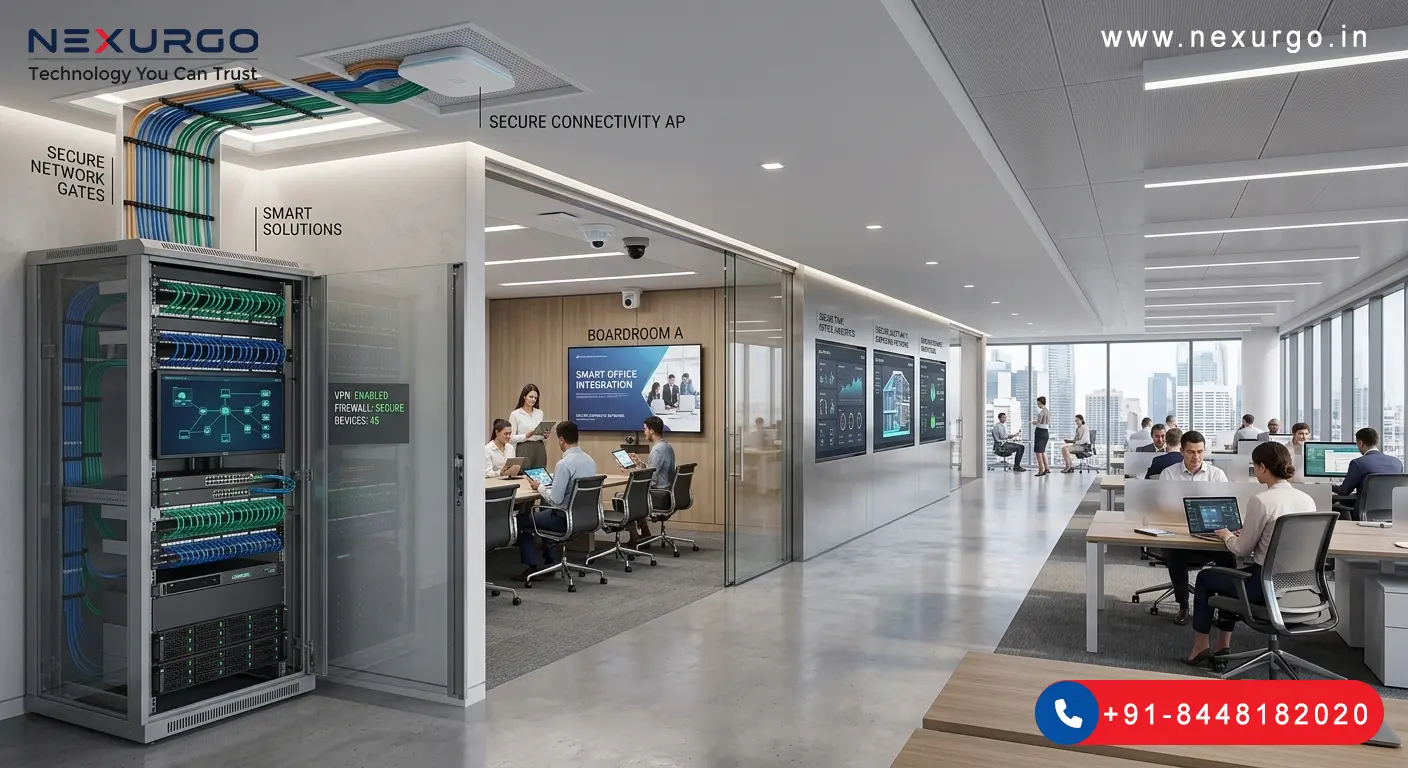
The Core Pillars of a Robust Office Network
A reliable corporate network balances speed, dependability, and data integrity. To achieve this, modern office networking solutions are built on three foundational layers:
1. High-Speed Structured Cabling and Fiber Optics
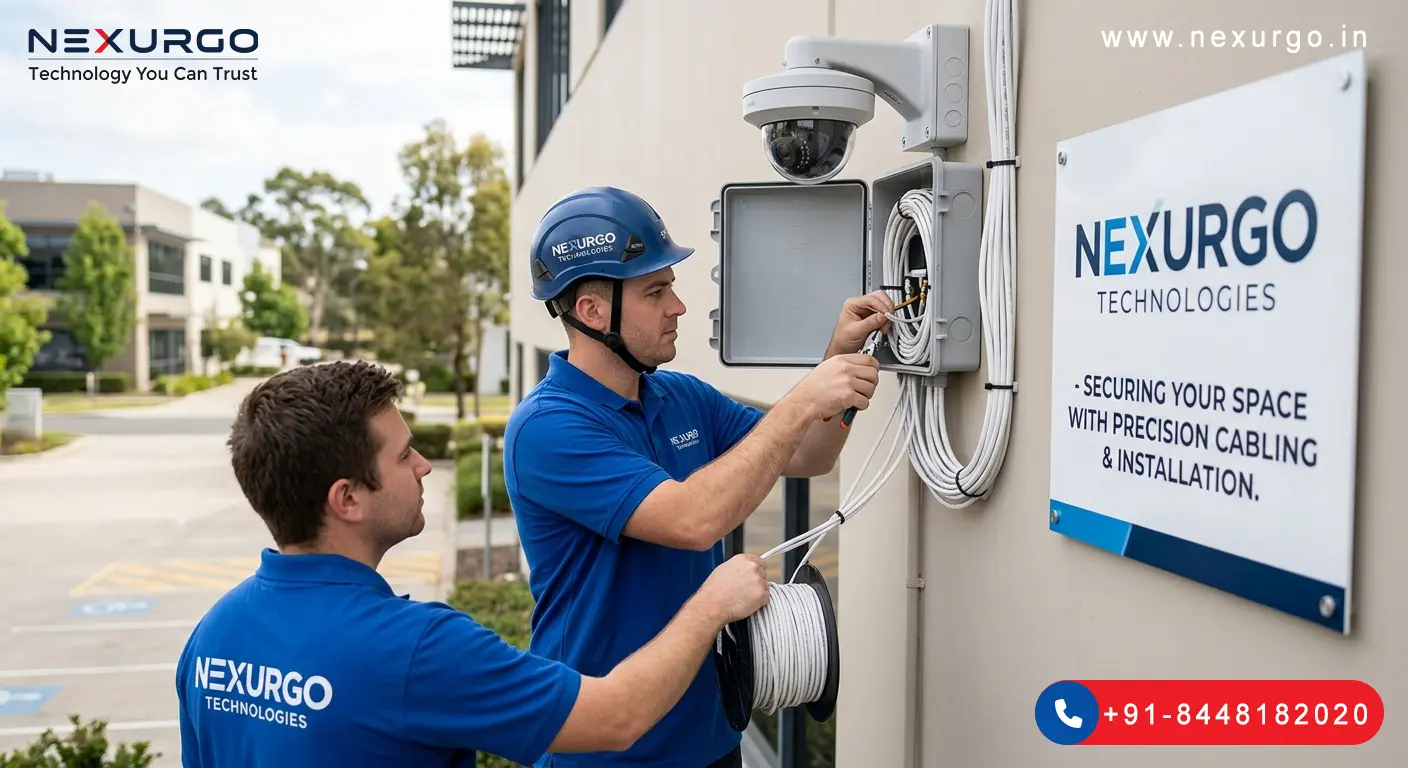
While wireless technology gets all the attention, a flawless wireless experience depends entirely on a rock-solid wired backbone. Structured cabling utilizing Category 6A (Cat 6A) or Fiber Optic backbones forms the baseline of enterprise setups.
-
Cat 6A/Cat 8: Supports data transfer speeds up to 10 Gbps, essential for connecting high-performance workstations and localized network switches.
-
Fiber Optics: Delivers unmatched bandwidth over longer distances, acts as the core backbone between server rooms, and provides complete immunity to electrical interference.
2. Multi-Gigabit Switching and Power over Ethernet (PoE)
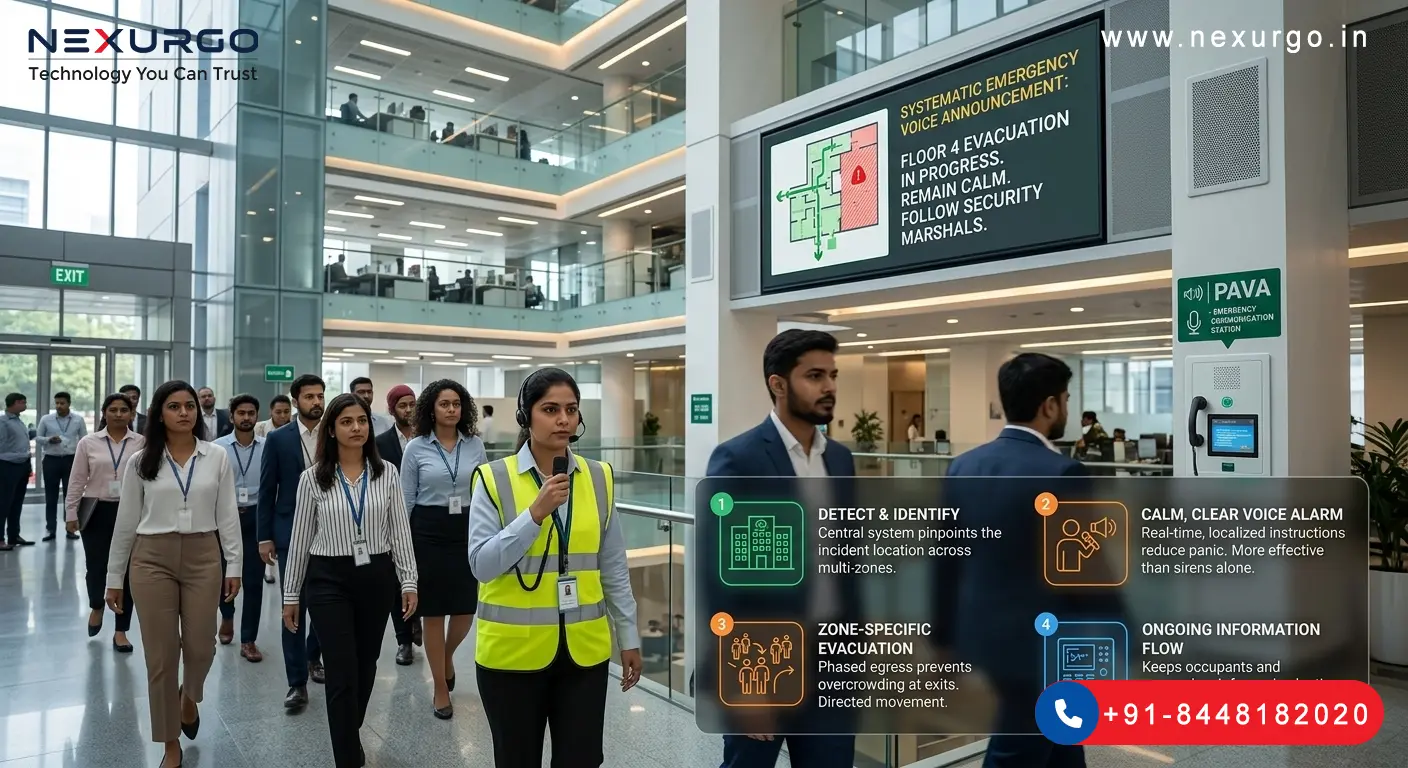
Modern edge devices—like high-definition IP security cameras, access control scanners, and smart PAVA systems—require both data and power. Upgrading to Multi-Gigabit Switches (2.5G/5G/10G) equipped with PoE+ or PoE++ simplifies office deployment. It removes the need for separate electrical wiring for every device, keeps your ceilings clean, and ensures higher data processing capacity at the network edge.
3. Next-Generation Wireless Systems (Wi-Fi 7)
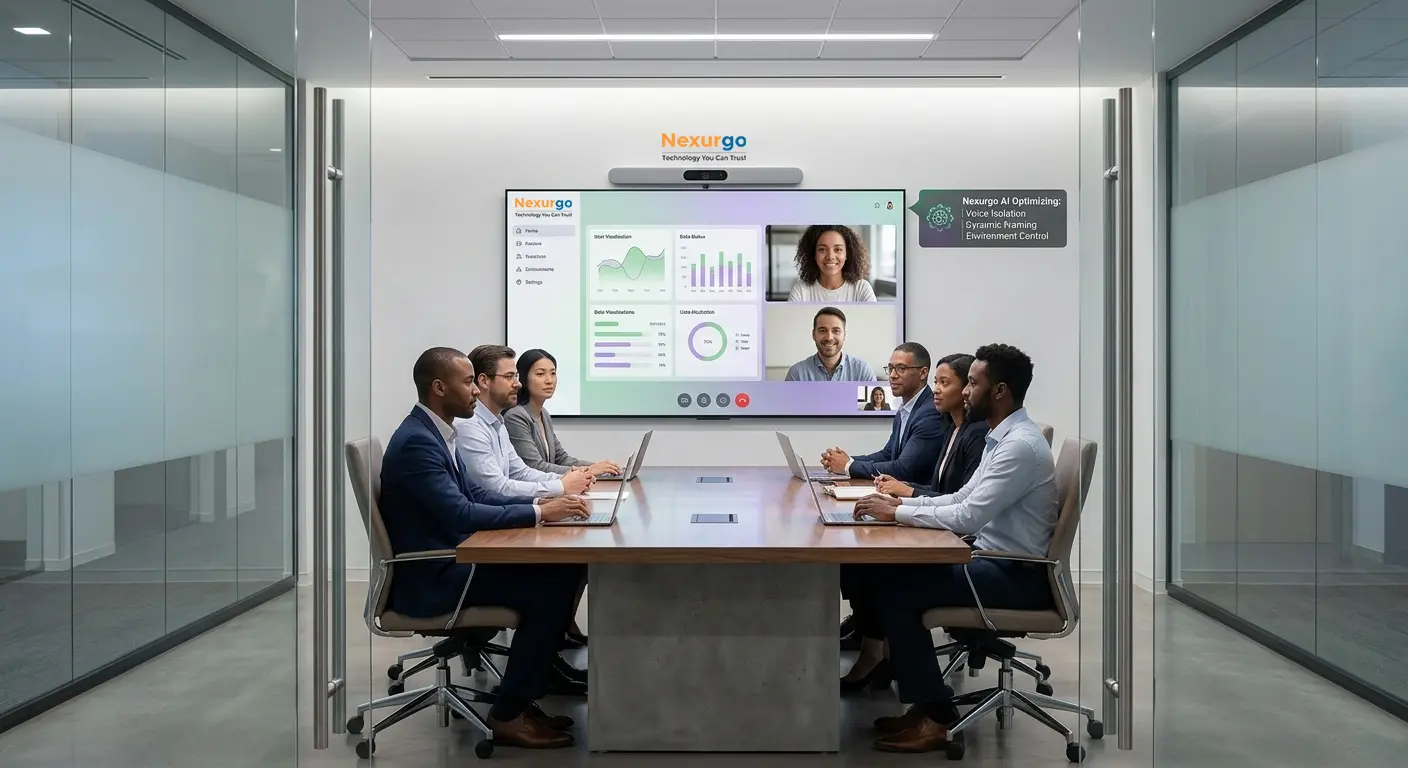
Dense office environments filled with smartphones, laptops, and IoT sensors quickly saturate old 2.4 GHz and 5 GHz wireless bands. Deploying Wi-Fi 7 access points introduces wider channels and drastically lowers latency, providing a seamless, "wired-like" wireless experience even during high-density team meetings or cross-department video presentations.
Smart Architectural Strategies for Enterprise Networking
Designing an office network is an engineering puzzle that must account for physical space, employee traffic patterns, and data sensitivity.
Flat URL and Network Segmentation Architectures
Just as technical SEO prioritizes a flat structure for faster data crawling, corporate networks benefit from flat, efficient logical layouts. Segmenting your office network into distinct Virtual Local Area Networks (VLANs) ensures that data moves along the shortest path possible while isolating traffic:
| Network Segment (VLAN) | Primary Purpose | Security Policy |
| Core Corporate | Employee laptops, ERP/CRM access, internal file servers | Restricted access, strict identity verification |
| IoT & Automation | CCTV, smart lighting, HVAC controls, PAVA systems | Isolated from core databases to prevent lateral hacks |
| Guest Wi-Fi | Visitors, client mobile devices, temporary access | Internet-only access, completely walled off from company assets |
Transitioning to SD-WAN and SASE
For businesses managing multiple branch offices or regional hubs, traditional MPLS circuits can be rigid and cost-prohibitive. Moving toward SD-WAN (Software-Defined Wide Area Network) allows IT administrators to dynamically route traffic over multiple internet connections based on real-time demand.
When paired with SASE (Secure Access Service Edge) architectures, networking and cloud security merge into a single cloud-managed layer, protecting your hybrid workforce whether they are sitting at their desks or logging in remotely.
Why Network Security and Physical Infrastructure Must Converge
In the past, networking teams built the pipes, and security teams put up the firewalls. Today, that separation is a major operational liability. Modern network solutions embed security directly into the physical and logical infrastructure.
-
Zero Trust Network Access (ZTNA): This protocol operates under the assumption that every device trying to connect is a potential threat. No device gets automatic access based on being plugged into a physical office desk; continuous device-posture assessment and identity verification are required.
-
Physical Redundancy: True network resilience means designing out single points of failure. Utilizing dual Internet Service Providers (ISPs) with automated failover, alongside Uninterruptible Power Supplies (UPS) in server racks, ensures your business operations stay online even during physical line breaks or local power grid failures.
Transform Your Enterprise Infrastructure
A slow, dropping network connection does more than frustrate employees—it directly impacts client communication, slows down transactional data, and halts daily productivity. Investing in a highly structured, scalable, and intelligent network infrastructure is a foundational strategic step for any modern facility.
At Nexurgo Technologies, we engineer elite, enterprise-grade Networking Solutions, Structured Cabling, and Integrated ELV Systems tailored for smart corporate offices, commercial hubs, and industrial facilities. From initial schematic architectural design to multi-site deployment and centralized cloud-managed security, we construct the robust digital highways that power your business growth.
Ready to upgrade your workspace with lightning-fast, secure networking architecture? Get in touch with the network engineering specialists at Nexurgo Technologies today to design a custom connectivity blueprint for your business.